The EPA estimates about 4 million lead or galvanized water lines still need to come out, and most water systems have about 10 years to do it.
About 4 million water service lines in the U.S., the pipes that carry water from the main under the street into a home or building, are made of lead or are galvanized steel lines that need to be replaced, according to EPA estimates updated in 2025. About 2.7 million of them are lead.
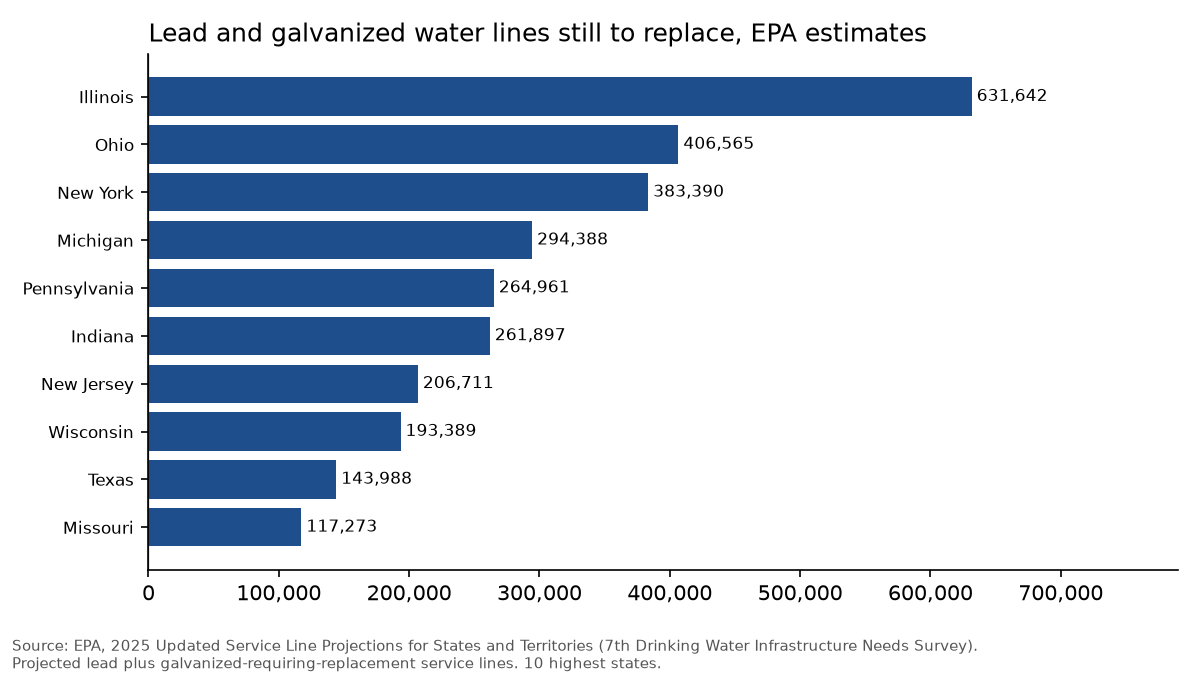
These are EPA estimates based on a survey of water systems, not a pipe-by-pipe count. They’re concentrated in older states in the Midwest and Northeast:
- Illinois: 631,642 (16.5% of its service lines)
- Ohio: 406,565
- New York: 383,390
- Michigan: 294,388
By share of all service lines, Illinois is highest, followed by the District of Columbia (13.8%), Wisconsin (13.5%) and Rhode Island (13.3%).
The deadline
Under the EPA’s Lead and Copper Rule Improvements, most water systems must replace their lead and galvanized-requiring-replacement service lines within 10 years. The clock starts on the rule’s compliance date, November 1, 2027, set in the final rule published in the Federal Register. That puts the general deadline around 2037, though the rule gives some extra time to a limited number of systems that can’t replace every line in 10 years. Water systems are already building inventories of their lines, and many have started replacing them.
What this means for plumbers
Replacing a service line usually means digging from the curb to the house and connecting a new line inside, and in some places homeowners pay for the part on their property. That makes for steady work for plumbing and excavation contractors over the next decade, especially in the states above. Utilities often require contractors to carry specific insurance before they’ll hire them. See our guides to plumbing insurance in Illinois, plumbing insurance in Ohio and plumbing insurance in New York.
How we got these numbers
Figures come from the EPA’s 2025 Updated Service Line Projections spreadsheet, which updates estimates from the 7th Drinking Water Infrastructure Needs Survey and Assessment. “Lead and galvanized” adds projected lead service lines and galvanized lines requiring replacement (galvanized pipes that are or were downstream of lead). EPA’s 2025 projections show no lines of unknown material. Shares divide by EPA’s projected total service lines for each state. State totals cover the 50 states and D.C.; the national total includes territories. Data pulled October 18, 2026.