By StartBusinessByStatePublisher: Robert SmithResearch process
The Kentucky Education and Labor Cabinet states that employers with one or more employees must obtain workers’ compensation unless authorized as self-insured. Family members, temporary workers and part-time workers count. Ordinary residential or commercial landscaping is not the agricultural exemption under KRS Chapter 342 — do not treat a lawn crew as farm labor to avoid coverage.
Get my landscaping insurance quote
Quotes through Thimble, an online business insurance agency. Review your price and coverage before buying.
We may earn a commission if you buy through our links, at no additional cost to you.
Which landscaping coverages should you compare?
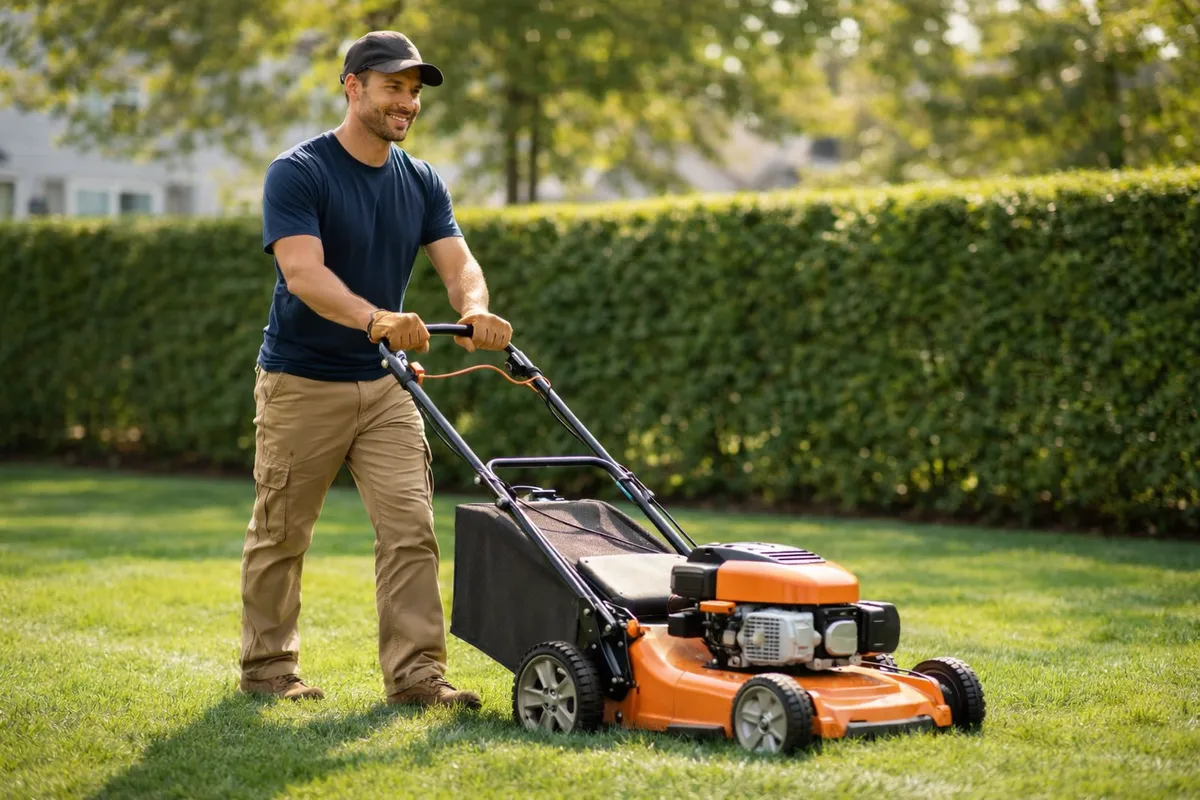
A mower can throw debris toward a window, or a customer can trip over equipment left near a path. General liability helps with covered injury and property damage claims and their defense costs. Start with the lawn and landscape services you actually sell.
Tell the agency about chemical application, tree work, excavation and other specialties. Ask which activities and endorsements your quote includes before accepting those jobs.
These are separate coverage needs. Available products and terms depend on your work, location and insurer; a liability quote does not automatically include every policy above.
| What you need to protect | What to compare |
|---|---|
| Customer injury, damaged plants, irrigation and hardscape claims | General liability, including products and completed operations for finished landscape work. |
| Herbicide drift, fertilizer burn and chemical application claims | Ask whether pesticide/herbicide applicator wording is included, excluded or available by endorsement — not automatic on every GL form. |
| Crew injuries on the job | Workers’ compensation once your state’s employee trigger is met (or if you elect coverage sooner). |
| Trucks, trailers and travel between jobs | Commercial auto (and hired/non-owned auto when helpers drive personal vehicles). GL does not replace auto. |
| Mowers, blowers, trailers and tools away from the shop | Tools and equipment / inland marine at storage, in transit and on jobs — not the truck’s auto policy. |
| License, permit or pesticide financial-responsibility floors | Surety bond or filed liability certificate when a board or statute requires it — separate from a client COI. |
Commercial auto, trailers and tools
Crew trucks and trailers need commercial auto. Ask about hired/non-owned auto when helpers drive personal cars. Tools and equipment / inland marine cover mowers and blowers at storage, in transit and on jobs. Keep the KDA financial-responsibility filing separate from client additional-insured requests — both may matter, for different reasons.
Match each risk to the right policy
The $1,000,000 pesticide dealer filing does not automatically match every GC endorsement. GL does not replace workers’ compensation or auto. A COI does not create coverage. Bonds and liability policies answer different loss scenarios even when either can satisfy KRS 217B.130.
How much does landscaping insurance cost in Kentucky?
Your price depends on your services, location, staffing, claims history and the coverage you select. A quote gives you a price for your own business. Use the figures below to plan your budget.
| Coverage | Monthly median | Annual median |
|---|---|---|
| General liability | $63 | $761 |
| Workers’ compensation | $150 | $1,802 |
| Commercial auto | $299 | $3,590 |
| Business owner’s policy | $92 | $1,101 |
| Tools and equipment | $53 | $637 |
| License/permit bond | $9 | $112 |
| Commercial umbrella | $92 | $1,101 |
Benchmark source, dates and budgeting details
How much does Kentucky landscaping insurance cost?
Insureon’s national landscaping customer medians (source checked November 2, 2026) provide a starting reference: general liability $63/month ($761/year), workers’ compensation $150/month ($1,802/year), tools and equipment $53/month ($637/year), commercial auto $299/month ($3,590/year), license/permit bonds $9/month ($112/year), commercial umbrella $92/month ($1,101/year), and a business owner’s policy $92/month ($1,101/year). These are national Insureon landscaping-customer medians — not state-specific quotes and not personalized insurer prices.
Do not add every row together. A business owner’s policy can bundle general liability with property, so those lines may overlap. Workers’ compensation, commercial auto, pesticide endorsements and surety bonds remain separate questions. Your provider needs services, revenue, payroll, vehicles, claims, limits and equipment values to quote the actual crew.
Request an annual total for the same service mix and coverage dates. Ask whether payment plans, certificates, additional-insured endorsements or midyear changes add charges.
Review the annual total, deductible and limits together. Include any required endorsements so the quote prices the protection your work calls for. A business owner’s policy can combine liability and property coverage; those costs can overlap.
Kentucky insurance requirements for landscapers
Use your licensing rules and written customer requirements to set the coverage you need. Give the agency those documents so it can check the quote against them.
Kentucky does not issue a statewide landscape contractor trade license for mowing and planting. Local occupational licenses (for example in Louisville Metro or Lexington-Fayette) are a separate question from state pesticide registration.
For-hire pesticide dealers — $1,000,000 financial responsibility
When you apply pesticides to the lands of others as a dealer, KRS 217B.130 requires evidence of financial responsibility: a surety bond or a liability insurance policy of not less than $1,000,000. The department may accept a deductible of up to $1,000 under the statute’s conditions. KDA company-registration materials likewise remind applicants to maintain proof of the $1,000,000 coverage with an expiration date.
If your operation never applies pesticides, that $1,000,000 dealer floor is not a statewide mowing mandate — but HOAs, commercial properties and municipalities often still require general liability by contract. Follow the statute, not third-party summaries that quote lower split limits.
Get your landscaping insurance quote
Thimble arranges business insurance with insurers. Its landscaping insurance route lets you price available liability coverage online.
- Describe your business. Enter your location, crew and landscaping services. Include mowing, planting, maintenance and any specialty operations.
- Review the available coverage and price. Match the limits, covered activities and dates to your requirements. You choose whether to purchase.
- Put your policy and proof of insurance in place. After purchasing a policy, access your certificate online and check the coverage start date before the job.
A certificate of insurance shows your existing coverage. It does not add coverage or make a customer an additional insured; that may require a policy endorsement.
Prepare your Kentucky landscaping insurance quote
- Business entity, operating address, start date and years in business.
- Services: mowing, planting, hardscape, irrigation, tree work, snow (if any) and pesticide/fertilizer applications.
- Revenue, payroll, worker roles, owner participation and any 1099 help.
- Truck and trailer details, drivers, and where equipment is stored overnight.
- Tool and equipment values, plus any pesticide products and application methods.
- Claim history, current policies, license or pesticide filings, and each client’s written insurance requirements.
Have providers quote the same activities, limits, deductibles and effective date. Ask for the annual total, payment charges and costs for required endorsements. Get written confirmation of unresolved exclusions before relying on the policy for a new Kentucky job.
Get protection for the next stop on your route
Get my landscaping insurance quote
Continue to Thimble’s landscaping insurance page to start your quote.
We may earn a commission if you buy through our links, at no additional cost to you.
Kentucky landscaping insurance questions
When does a Kentucky landscaper need workers’ compensation?
Employers with one or more employees — including family, temporary and part-time workers — must carry WC unless commissioner-authorized to self-insure. Ordinary landscaping is not treated as the agricultural exemption.
Does every Kentucky lawn crew need $1,000,000 of insurance?
KRS 217B.130 applies to dealers applying pesticides to the lands of others. Mowing-only operations without pesticide application are not handed that statewide floor by the statute, though contracts often still demand GL.
Is the KDA requirement a bond or a liability policy?
Either a surety bond or a liability insurance policy of at least $1,000,000 can satisfy KRS 217B.130. Deductibles up to $1,000 may be accepted under the statute’s conditions.
Does a certificate make a property manager an additional insured?
No. Confirm endorsements and limits in the policy before you send the COI.
Sources and further coverage guidance
Related guides
Kentucky landscaping · Landscaping business insurance
Sources
- Kentucky ELC — Employer WC FAQs — WC at 1+ employees
- KRS 217B.130 — Dealer financial responsibility ≥ $1,000,000
- KDA — Pesticide company registration form — Proof of $1,000,000 insurance reminder
- Insureon — landscaping insurance cost — National customer medians, updated October 12, 2026
Coverage and contract help
- Insurance requirements for contracts: what limits, certificates and endorsements commercial and public buyers ask for.
Original source review: September 14, 2026
Requirements and source benchmarks checked September 14, 2026. Policy terms and availability depend on the insurer and your business.
Page presentation updated November 2, 2026. State requirements and cost benchmarks retain their separately stated source-review dates. Coverage is subject to eligibility, policy terms and state availability.
Cost benchmarks rechecked November 2, 2026 against Insureon’s current landscaping-customer figures. These remain national medians, not state-specific prices or a Thimble quote. Separately dated regulatory corrections do not imply that every local requirement has been verified.