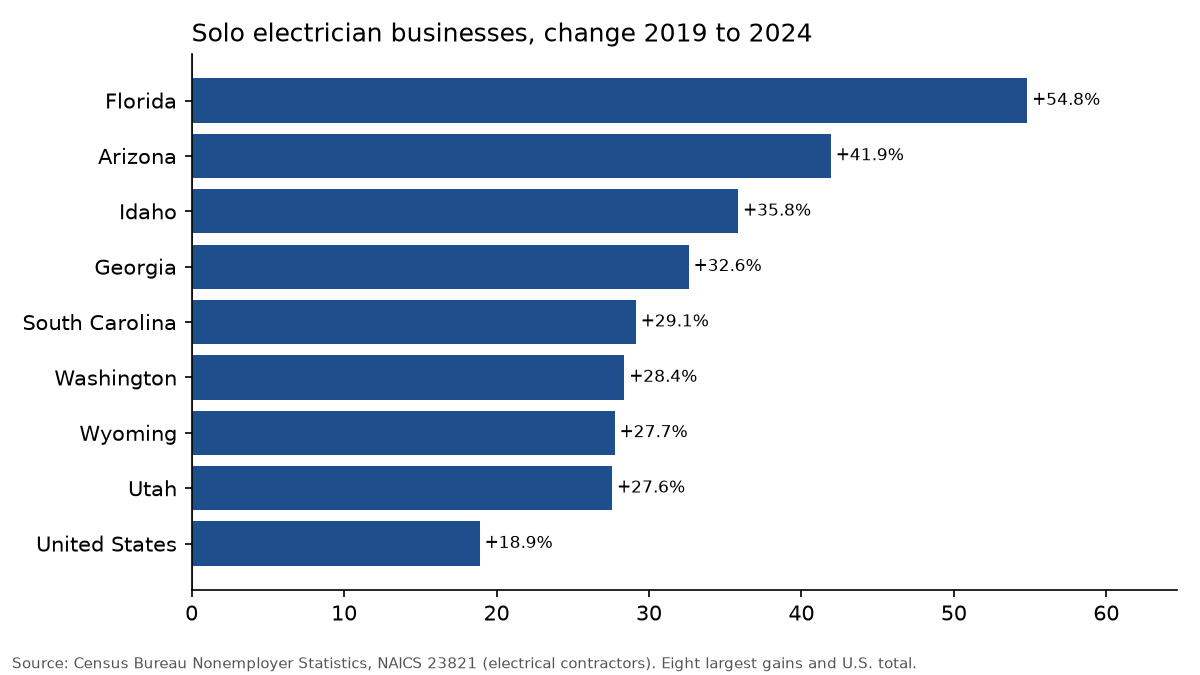
Florida is adding self-employed electricians faster than any other state. Solo electrical businesses there grew 55% from 2019 to 2024, Census data show.
Florida had 20,258 electrical contracting businesses with no employees in 2024, up from 13,086 in 2019. That’s a 54.8% jump, the fastest in the country and almost three times the national rate.
Nationwide, solo electrician businesses grew 18.9%, from 144,369 to 171,644. Florida alone added about 7,172 of the 27,275 new ones, roughly 1 in 4. The next-fastest states:
- Arizona: 2,230 to 3,165 (+41.9%)
- Idaho: 664 to 902 (+35.8%)
- Georgia: 6,432 to 8,529 (+32.6%)
- South Carolina: 2,334 to 3,014 (+29.1%)
What a solo electrician brings in
Florida’s solo electricians averaged about $45,931 in sales in 2024. The national average was $57,171. These are sales before costs like materials, fuel and insurance, not profit.
What this means if you’re going out on your own in Florida
Florida requires a state license to contract electrical work, and most general contractors and customers will ask for proof of liability insurance. See our guide to electrician insurance in Florida. Many one-truck shops also set up an LLC to keep business and personal money apart; here’s how to start an LLC in Florida. If you need money for a van or tools, our electrician business loans guide shows how SBA loans work.
How we got these numbers
These counts come from the Census Bureau’s Nonemployer Statistics. A “nonemployer” business has no paid employees and at least $1,000 in yearly sales; most are self-employed people filing a Schedule C tax form. We compared 2024 (the newest year, released this fall) with 2019 for industry code 23821 (electrical contractors and other wiring installation contractors). One person can own more than one business, and side gigs count the same as full-time work. Revenue figures are average yearly sales (receipts), not profit, and are not adjusted for inflation. Data pulled October 16, 2026.