EPA data show 1,444 community water systems serving 6.3 million people had tap-water lead above the federal action level at least once in the past five years.
1,444 of the 48,811 active community water systems in the U.S. had at least one lead “action level exceedance” in the past five years, according to EPA’s ECHO database. Those systems serve about 6.3 million people combined.
An exceedance means that in at least one round of testing, the top 10% of home tap samples had more than 15 parts per billion of lead. It isn’t a violation by itself. It requires the utility to take steps such as adjusting water treatment, telling customers and replacing lead pipes. It also doesn’t mean every home on the system had high lead.
- 1,272 of the 1,444 are small systems serving 3,300 people or fewer.
- 11 serve more than 100,000 people. The largest is the Boston Water and Sewer Commission in Massachusetts.
- 267 systems had two or more exceedances in the five years.
Where the most people are affected
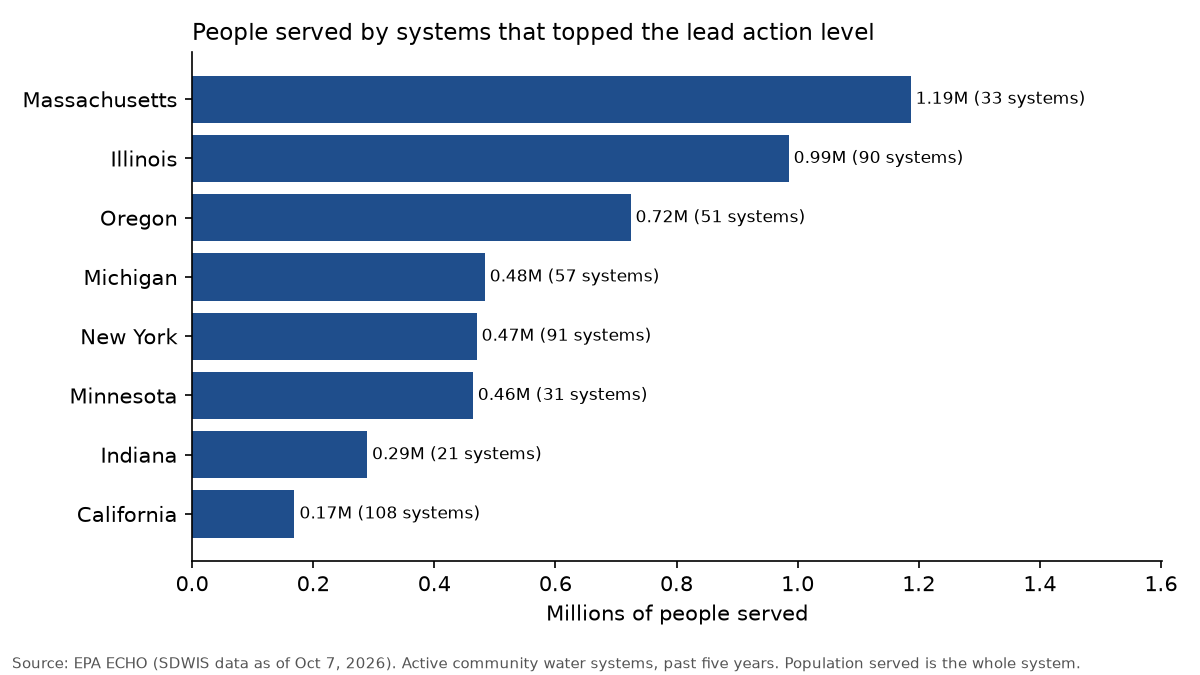
Counting people served, the top states are Massachusetts (1.19 million, 33 systems), Illinois (0.99 million, 90 systems), Oregon (0.72 million, 51 systems). By share of systems, smaller New England states and Alaska rank highest: Rhode Island 9.1%, Vermont 7.4%, Alaska 6.6%, Massachusetts 6.2%. A single big-city exceedance can put a state near the top for people served.
Why plumbers should watch this
EPA’s Lead and Copper Rule Improvements require most water systems to replace lead service lines within 10 years and lower the action level. Most new requirements, including the lower 10 parts per billion trigger, start November 1, 2027, according to the National League of Cities. Water utilities are challenging the rule in federal court; a D.C. Circuit panel heard arguments on Sept. 30. However that case comes out, replacing lead lines and fixtures is plumbing work that utilities often hire contractors to do.
What this means if you run a plumbing business
Lead line replacement often goes out to bid, and utilities and cities will ask for proof of insurance and licensing. See our guides to plumbing insurance in New York and plumbing insurance in Pennsylvania. For equipment like a mini-excavator or pipe-bursting gear, our HVAC and plumbing business loans guide explains SBA options.
How we got these numbers
We pulled every active community water system in the 50 states and D.C. from EPA’s ECHO drinking water search on October 17, 2026. ECHO’s SDWIS data were last refreshed October 7, 2026 (ECHO data dates). The exceedance field counts how many times a system’s 90th-percentile lead result topped 0.015 mg/L in the past five years (ECHO definitions). “People served” is the system’s total population, not people with high lead at the tap. Community systems serve homes year-round; schools, offices and campgrounds with their own wells are not included. 28 systems on tribal lands are counted in the state where they sit.