Last updated:
Oklahoma is one of the easier states to start a landscaping business in – there is no state landscape contractor license, and most pure mow/edge/plant work requires no specialized state permit beyond your standard business filings. The licensing burden kicks in when you start applying chemicals: any commercial application of herbicides, insecticides, or fungicides triggers the Oklahoma Department of Agriculture, Food, and Forestry (ODAFF) Commercial Pesticide Applicator requirement under 2 O.S. § 3-81+. The relevant category is Category 3A (Ornamental and Turf Outdoor Pest Control) – and unlike many states that split ornamental and turf into two separate categories (3A vs 3B), Oklahoma combines them into a single Cat 3A. Category 3B in Oklahoma is reserved for interiorscape work (plantings inside hospitals, malls, office buildings).
Want the LLC part done today?
The lease, the insurance certificate, and the business bank account all attach to your registered business entity — so forming the LLC first saves redoing paperwork later. ZenBusiness files your Oklahoma LLC and walks you through every step; most people finish the application in one sitting. The free plan is genuinely $0 plus the state fee, and you can skip any add-ons you don’t need at checkout — the filing itself is complete without them.
Affiliate link — we earn a commission at no cost to you.
$0 + $100 Oklahoma state fee · Rated “Excellent” from 32,224 Trustpilot reviews · Prefer DIY? Our Oklahoma guide covers filing directly with the state — the state fee is identical either way.
The other Oklahoma-specific operational reality is the climate. Oklahoma sits squarely in USDA Hardiness Zones 6b-7b, with bermudagrass dominating residential and commercial turf statewide, periodic Plains drought (especially in western counties), and frequent tornado-driven debris work in May-June. Combined with the Tornado Alley HVAC and roofing demand, Oklahoma landscapers see a reliable Q2 surge in cleanup and replanting work. Western Oklahoma has more native-grass and xeriscape demand; eastern Oklahoma has the highest tree-care and large-property maintenance volume.
This guide covers exactly what Oklahoma requires to license, equip, and operate a landscape business in 2026.
Oklahoma Landscaping Requirements at a Glance
| Requirement | Authority | Cost | Timeline |
|---|---|---|---|
| State Landscape Contractor License | None – Oklahoma has no state landscape license | N/A | N/A |
| Commercial Pesticide Applicator (if applying chemicals) | ODAFF under 2 O.S. § 3-81+ | $100/category, capped at $500/year | Annual; recertification cycle through ODAFF |
| Category 3A Ornamental and Turf Outdoor (combined) | ODAFF | $100 + Core exam fee | Pass exam ≥ 70%; OSU Extension training |
| Pesticide Business License (if applying chemicals) | ODAFF – separate from individual cert | License fee per ODAFF schedule | Each operating location needs its own |
| Continuing Education for Recertification | ODAFF / OSU Extension / approved providers | $50-$200 per cycle depending on provider | Recertification every few years per ODAFF rule |
| OKIE811 (Call Before You Dig) | OKIE811 under 63 O.S. § 142.1+ | Free | 48 hours minimum (excl. date/Sat/Sun/holidays); valid up to 14 days |
| LLC Articles of Organization | Oklahoma Secretary of State | $100 + $25/year Annual Certificate | 2-5 business days |
| Sales Tax Permit (if selling tangible goods or applying pesticide) | OkTAP | $20; renewed every 3 years | Before sales |
| Workers’ Compensation (1+ employees) | Title 85A; private carrier or CompSource Mutual | ~4-9% of payroll for NCCI 0042 | Day 1 of first hire |
| Commercial Auto Insurance | Commercial insurer | $1,500-$3,500/year per truck | Personal auto policies don’t cover commercial use with employees |
| General Liability ($1M / $2M) | Commercial insurer | $500-$1,800/year | Strongly recommended |
| Oklahoma City / Tulsa local business permit | Each city – varies | Generally minimal or none for landscapers | Where local ordinance applies |
Shopping for coverage? Compare landscaping business insurance costs and coverage in Oklahoma, including exclusions, state requirements and details to prepare for a quote.
How to Start a Landscaping Business in Oklahoma (Step by Step)
Step 1: Decide on Service Mix – Pesticide or Not
The single biggest licensing fork is whether you’ll apply chemicals. Three common service profiles:
- Mow / Edge / Trim only – no pesticide application; no ODAFF license required. Lowest entry barrier; lowest service ticket.
- Mow + Mulch + Plant Installation – landscape installation work without spraying. Still no ODAFF license; but the work mix increases your liability exposure (sprinkler damage, plant warranty issues).
- Full-service Lawn Care + Pesticide – includes weed-and-feed, broadleaf control, fungus, fire ant work, tree-and-shrub spraying. Requires ODAFF Commercial Pesticide Applicator certification + Pesticide Business License. Highest revenue per customer ($75-$150/visit recurring vs. $35-$65 for mowing only).
Most successful Oklahoma landscape companies eventually move to full-service – the pesticide ticket adds 50-100% to monthly revenue per residential customer, and commercial properties expect pesticide as part of any maintenance contract.
Step 2: Form Your Oklahoma LLC
File Articles of Organization for $100 with the Oklahoma Secretary of State; pay $25 Annual Certificate each year. Single-member LLC works for most solo operators; family operations and partnerships use multi-member LLC. Get your free EIN at IRS.gov immediately.
Step 3: Take the ODAFF Pesticide Exams (If Applying Chemicals)
For commercial pesticide application in Oklahoma, you need:
- Core / Laws exam – covers federal FIFRA, Oklahoma pesticide law (2 O.S. § 3-81+), and general application principles. Required for all categories.
- Category 3A exam – covers Ornamental and Turf Outdoor pest control. Note: Oklahoma combines ornamental and turf into a single Cat 3A. Many states (Texas, Indiana, Missouri) split them into separate 3A and 3B exams; Oklahoma does not.
- Other categories as needed – 3B Interiorscape (interior plantings), 5 Aquatic, 6 Right-of-Way, 7 Industrial/Institutional, 8 Public Health, 10 Demonstration and Research
Cost: $100 per category, capped at $500 total annually for the business. Pass score: 70%. Study materials: the Oklahoma Cooperative Extension Service (OSU Extension) publishes E-954: Oklahoma Pesticide Applicator Certification, available free at the Pesticide Safety Education Program. OSU Extension county offices statewide host PAT (Pesticide Applicator Training) prep sessions, especially January-March before peak season.
Step 4: Register the Pesticide Business License
Once you have the certified applicator, the BUSINESS needs a separate Pesticide Business License from ODAFF. Key points:
- Each operating location requires its own business license
- The certified applicator must be a “responsible employee” for the business location – meaning you (the owner) typically also hold the certification, or you employ a certified person who is “responsibly in charge”
- Business license includes proof of GL insurance carrying ODAFF as certificate-holder
- Renewal is annual
Solo operator? You hold both the individual certification and the business license. Family LLC with multiple trucks but one operating location? One business license covers it. Multi-location operation (OKC + Tulsa)? Each location is a separate business license.
Step 5: Set Up OkTAP and Sales Tax Treatment
Register at OkTAP for the Sales Tax Permit ($20, every 3 years). Oklahoma’s sales tax treatment of landscape services:
- Pure mowing, edging, trimming labor – generally NOT taxable when billed as a stand-alone service; service-only invoices typically pass without state sales tax
- Plant installation labor – generally treated as real-property improvement; the landscaper consumes the materials at the wholesale supplier (paying tax there), and labor is not separately taxable
- Pesticide application service – the materials applied (herbicide, fertilizer) are taxable to the contractor at purchase; the labor portion is the gray area depending on contract structure
- Bundled services – if you bundle mowing with pesticide application on a single invoice line, the entire amount can be treated as taxable; separately stated charges usually preserve the non-taxable mowing line
- Retail product sales – mulch, soil, plants, lawn ornaments sold separately to customers are taxable at the combined state-plus-local rate
Bottom line: invoice cleanly. List mowing, application labor, plant material (real-property improvement) on separate lines. Talk to an Oklahoma CPA familiar with landscape businesses if you’re growing past $250K revenue – the contractor-vs-retailer treatment can affect your audit posture.
Step 6: Workers’ Compensation and Crew Considerations
WC at 1+ employee under Title 85A. NCCI class code 0042 (Landscape Gardening) applies to most Oklahoma landscape companies; rates run roughly 4-9% of payroll – among the higher trade rates because of saw, mower, and trip-and-fall injury frequency. Code 2702 (Tree Pruning) applies to dedicated tree work and runs even higher (10-20% of payroll).
Crew composition is the audit-and-compliance focus area:
- W-2 employees are covered by your WC policy
- True 1099 subcontractors with their own LLC, equipment, and other clients are not your WC liability
- Day laborers paid cash from a parking lot are W-2 employees in the eyes of the IRS, OESC, and OKDOL – and the lack of paperwork creates massive audit exposure
- The 2024-2026 Oklahoma audit environment is aggressive on misclassification
Dedicated tree work can double your rate
Most Oklahoma landscape companies rate at NCCI 0042, roughly 4–9% of payroll — already among the higher trade rates because of saw, mower and trip-and-fall frequency. Code 2702 for dedicated tree pruning runs 10–20%, which can more than double the bill.
So if tree work is a side line rather than the business, it is worth making sure the payroll allocation reflects that rather than defaulting the whole crew to the higher code.
Coverage is required at 1+ employee under Title 85A. Simply Business quotes landscaping liability online with your certificate of insurance ready the moment you buy.
Affiliate link — we earn a commission at no cost to you.
Check OK landscaping insurance prices →
Free quote, no obligation · multiple quotes in under 10 minutes online · Simply Business is rated 4.3/5 from 1,859 reviews on Trustpilot
Step 7: OKIE811 – The 48-Hour Rule You Cannot Skip
Under the Oklahoma Underground Facilities Damage Prevention Act, 63 O.S. § 142.1+, anyone excavating – including digging fence post holes, installing irrigation, planting trees with augers, grading – must notify OKIE811 at least 48 hours before excavation, excluding the date of notification, Saturdays, Sundays, and legal holidays. Notice is valid up to 14 days. Place tickets at okie811.org or by calling 811. Failure to call before excavating can create civil liability for damaged underground facilities (gas, electric, water, fiber, sewer) plus statutory penalties.
Practical operations: book OKIE811 tickets when you book the job – Friday afternoon for a Tuesday morning install. Mark spots before the crew arrives. Photograph utility marks before digging in case there’s a dispute later. The free OKIE811 ticket is the cheapest insurance in your business.
Step 8: Equipment and Crew Build-Out
Year-one Oklahoma landscape equipment baseline for a 2-3 person crew:
- Truck (1/2-ton or 3/4-ton pickup) + open-deck or enclosed trailer
- Commercial zero-turn mower (Scag, Exmark, John Deere, Toro) – $9,000-$15,000
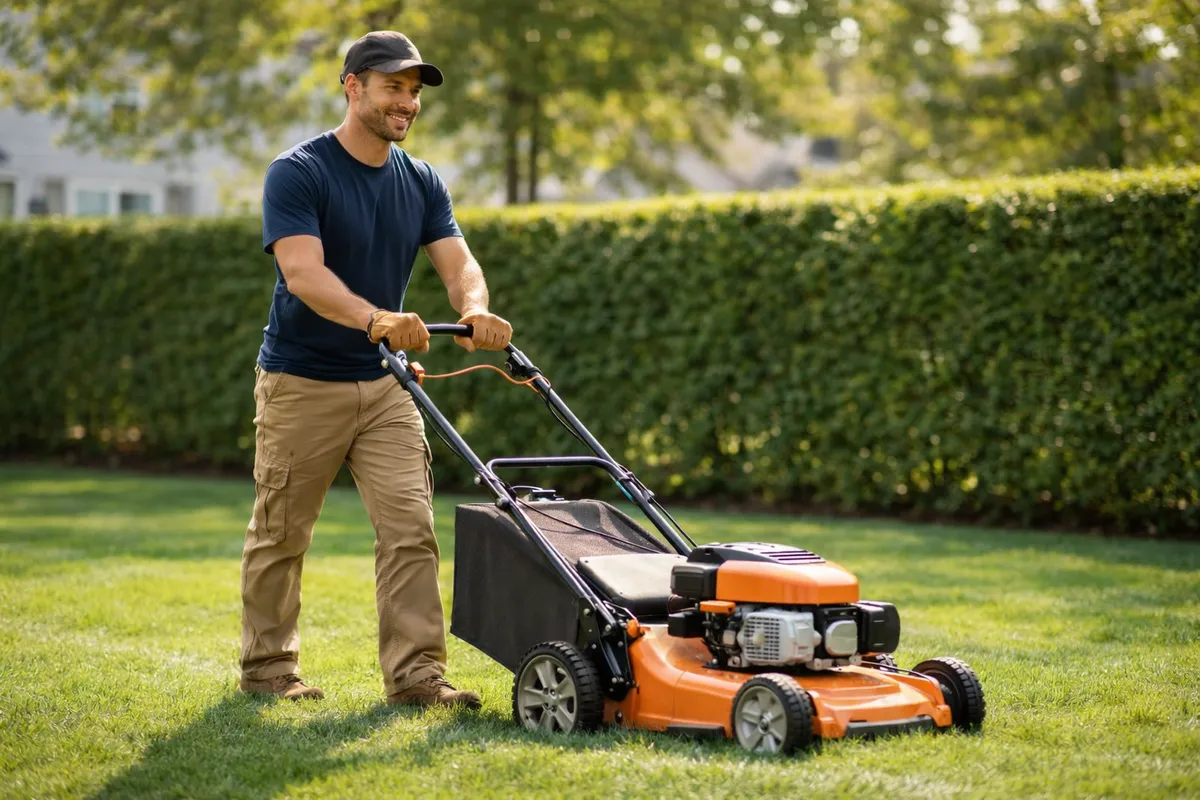
- 21″ walk-behind mower for trim work – $500-$1,200
- String trimmer + edger + blower (Stihl, Echo, Husqvarna) – $1,200-$2,500
- Backpack sprayer + tow-behind sprayer (if pesticide-licensed) – $300-$2,500
- Hand tools, safety gear, fuel cans
- Trailer with locking storage
Used equipment markets in OKC and Tulsa are active – many operators start with one used Scag or Bad Boy and upgrade as customer count grows.
Oklahoma’s Bermudagrass + Drought Reality
Oklahoma’s lawn and landscape demand is shaped by bermudagrass dominance and periodic drought:
- Bermudagrass – the standard residential and commercial turf statewide. Requires aggressive mowing during May-October peak growth, low-mow tolerance, and seasonal scalping. Cynodon dactylon (common bermuda), Tifway 419, TifTuf, and Latitude 36 are typical varieties.
- Fescue and Zoysia – secondary; fescue used in north OKC and Tulsa shaded yards, Zoysia in higher-end residential. Both require different fertilization and mowing programs.
- Drought – especially western Oklahoma – 2011-2014 multi-year drought taught operators to plan for water restrictions; the OKC Water Utilities Trust and Tulsa Water periodically issue Stage 1 and Stage 2 watering restrictions. Xeriscape demand has grown since 2015.
- Tornado Alley debris cleanup – May-June peak; landscape and tree-removal companies see a reliable Q2 spike. Insurance-claim work from hail and high winds is steady spring revenue.
- Ice storms (winter) – January-February ice damage to trees and shrubs creates dormant-season cleanup demand; some landscape companies pivot to limb removal, debris hauling, and tree-trimming during the winter “off season.”
- Pollen + cottonwood season – Oklahoma’s late-spring cottonwood and oak pollen drives gutter-cleaning, deck-power-washing, and seasonal yard cleanup work in April-May.
Oklahoma City and Tulsa Watering Restrictions
OKC and Tulsa each have ongoing water management programs that affect landscape pricing and customer expectations:
- Oklahoma City Squeeze Every Drop – voluntary year-round water-use guidance; Stage 1-3 mandatory restrictions in drought conditions. New residential lawn establishment may be subject to seasonal limits.
- Tulsa Water and Sewer – similar program; encourages odd/even watering and irrigation efficiency.
- Norman, Edmond, Stillwater – each maintain their own water restriction triggers based on Lake Thunderbird, Lake Arcadia, Lake Carl Blackwell levels respectively.
Customers often ask landscapers to advise on irrigation scheduling, smart controllers (Rachio, Hunter Hydrawise), and drought-tolerant plantings – a good upsell opportunity.
What Catches Oklahoma Landscapers Off Guard
- The pesticide license is for the SERVICE, not just the chemical. If you mix and apply Round-Up at customer properties for pay, you need an ODAFF Commercial Applicator license – even though Round-Up is sold over the counter. The “commercial application” trigger isn’t restricted to restricted-use pesticides.
- Cat 3A combines ornamentals + turf in Oklahoma. Don’t confuse this with Texas (3A Ornamental, 3B Turf split) or Indiana (3a/3b split). One Cat 3A exam covers both in Oklahoma.
- Bundled invoicing changes sales tax exposure. A “$200 lawn maintenance” bundle that includes mowing + spray treatment can be treated as fully taxable; separately stating “$140 mow + $60 herbicide treatment” preserves the non-taxable mowing portion.
- OKIE811 before EVERY excavation. Even a 12-inch shrub hole. Strike a fiber line and you owe the carrier the cost of repair – often $3,000-$15,000 – plus civil penalties.
- Workers’ comp at NCCI 0042. Rates are 4-9% of payroll – higher than HVAC. Crew injury rates in landscape are real; budget WC into your bid.
- 1099 day-laborer audits. The “I pay my crew cash” model is gone. OESC, IRS, and CompSource Mutual all flag the pattern – treat all crew as W-2.
- Tornado debris contracts go through FEMA / city-managed programs. After major tornado events (Moore 2013, El Reno 2013, Norman 2024), debris removal contracts are typically awarded to state-managed contractors. Walk-up door-to-door cleanup work is fine; large-scale debris management generally requires pre-qualification.
- Christmas light installation is the November-January seasonal pivot for many Oklahoma operators – solid Q4 revenue if you have ladders and crew willing to work cold.
Cost to Start a Landscape Business in Oklahoma
| Cost | Year 1 | Recurring |
|---|---|---|
| LLC + Annual Certificate | $125 | $25/year |
| ODAFF Commercial Applicator (Core + Cat 3A) | $100-$500 | varies by recertification cycle |
| Pesticide Business License | per ODAFF schedule | annual |
| OkTAP Sales Tax Permit | $20 | $20 every 3 years |
| Used pickup truck | $8,000-$25,000 | — |
| Open trailer | $1,500-$5,000 | — |
| Commercial mower (used Scag/Exmark/Bad Boy) | $3,500-$10,000 | — |
| Trimmer + edger + blower | $1,200-$2,500 | $500-$1,000/year wear |
| Sprayer + tank (if pesticide) | $300-$2,500 | — |
| Hand tools + safety + fuel | $500-$1,500 | — |
| Commercial auto insurance | $1,500-$3,500 | $1,500-$3,500/year |
| $1M GL insurance | $500-$1,800 | $500-$1,800/year |
| Workers’ Comp (1-2 employees, NCCI 0042) | $1,000-$4,500 | varies |
| Software (Jobber, Service Autopilot, Landscape Pro) | $30-$150/month | $30-$150/month |
| Total day-one outlay | ~$18,000-$57,000 | — |
Ready to form your Oklahoma LLC?
We earn a commission if you sign up through this link, at no extra cost to you.
ZenBusiness files your Articles of Organization with the Oklahoma Secretary of State, so the filing that trips up most first-time owners is handled for you. The ongoing filings Oklahoma requires afterwards are a separate compliance service, if you would rather not track those yourself.
Starts at $0 + Oklahoma state fee · Rated “Excellent” from 32,224 Trustpilot reviews
Related Oklahoma Business Guides
← Back to all Oklahoma business guides
- Landscaping Insurance Costs & Coverage in Oklahoma
- How to Start a Cleaning Service in Oklahoma
- How to Start an HVAC Business in Oklahoma
- How to Start a Private Investigation Business in Oklahoma
Data for Oklahoma
Free research and planning tools for starting a landscaping business in Oklahoma. Most of the data pages compare every state, so look for Oklahoma in the table or map.
- Immigrant workers by trade and state: the share of construction and cleaning workers in Oklahoma who were born abroad.
- OSHA heat program industries by state: how many Oklahoma jobs are in industries OSHA targets for heat checks.
- Best states to start a landscaping business: where Oklahoma ranks for a new landscaping business.
- Landscaping job pricing calculator: price a job from crew hours, travel, equipment and materials.
- Landscaping seasonal cash flow calculator: see how much cash you need to get through the off-season.
Start a Landscaping Business in Nearby States
Thinking about taking jobs across the state line, or just want to see how Oklahoma stacks up? Here are the same step-by-step guides for the states around Oklahoma, plus a few that other new landscaping business owners read most.
- Starting a landscaping business in Texas (borders Oklahoma)
- Starting a landscaping business in Arkansas (borders Oklahoma)
- Starting a landscaping business in Colorado (borders Oklahoma)
- Starting a landscaping business in New Mexico (borders Oklahoma)
- Starting a landscaping business in Missouri (borders Oklahoma)
- Starting a landscaping business in Kansas (borders Oklahoma)
- Starting a landscaping business in Florida (one of our most-read landscaping guides)
- Starting a landscaping business in Washington (one of our most-read landscaping guides)
Frequently Asked Questions
Do I need a state license to start a landscaping business in Oklahoma?
No – Oklahoma does not have a state landscape contractor license. Pure mowing, edging, trimming, mulching, and plant installation work do not require any state-level license. The licensing trigger kicks in if you apply chemicals: any commercial application of herbicides, insecticides, or fungicides requires an ODAFF Commercial Pesticide Applicator certification under 2 O.S. § 3-81+, plus a separate Pesticide Business License for the operating location.
What is the Oklahoma pesticide applicator license cost?
ODAFF Commercial Pesticide Applicator fees are $100 per category, capped at $500 total annually for the business. The most common category for landscape operators is Category 3A (Ornamental and Turf Outdoor Pest Control) – and unlike many states that split ornamental and turf into separate categories, Oklahoma combines them into a single Cat 3A exam. Plus the Core/Laws exam (required for all applicators). Pass score: 70%. Study with OSU Extension’s E-954 manual and the ODAFF Commercial Applicator manual.
Are landscape services taxable in Oklahoma?
Generally no for pure labor, but it depends on what you’re billing and how. Pure mowing, edging, and trimming labor are NOT taxable when billed stand-alone. Plant installation labor is treated as real-property improvement (contractor pays sales tax to wholesaler on materials; labor not separately taxable). Pesticide application is a gray area depending on contract structure. Bundling mowing with pesticide on a single line can make the entire amount taxable, so separately state charges. Retail product sales (mulch, plants, ornaments) are taxable at 4.5% state plus local rates.
How does OKIE811 work for Oklahoma landscapers?
Under the Oklahoma Underground Facilities Damage Prevention Act, 63 O.S. § 142.1+, anyone excavating must notify OKIE811 at least 48 hours before excavation, excluding the date of notification, Saturdays, Sundays, and legal holidays. Notice is valid up to 14 days. Place tickets at okie811.org or by calling 811. Service is free. Failure to call creates civil liability if you damage gas, electric, water, fiber, or sewer lines, plus statutory penalties.
Does Oklahoma require workers’ compensation for landscapers?
Yes. Oklahoma’s Title 85A requires WC at 1+ employee, no industry exception. NCCI class code 0042 (Landscape Gardening) applies to most landscape work; rates run roughly 4-9% of payroll because of the elevated injury frequency in the trade. Tree work uses NCCI 2702 (Tree Pruning) at higher rates. Coverage is available through any private licensed carrier or through CompSource Mutual, the state-chartered residual market.
What’s the difference between Oklahoma’s Cat 3A and Cat 3B?
In Oklahoma, Category 3A is Ornamental and Turf Outdoor Pest Control – it covers application of pesticides to lawns, ornamental trees and shrubs, parks, golf courses, and other outdoor recreational and residential areas. Category 3B is Interiorscape – application of pesticides to interior plantings inside structures (hospitals, malls, office buildings). This is different from many other states (Texas, Indiana, Missouri) that split outdoor into 3A Ornamental and 3B Turf, and treat interior under a different category.
What is bermudagrass and why does it matter to Oklahoma landscapers?
Bermudagrass (Cynodon dactylon) is the dominant residential and commercial lawn grass throughout Oklahoma – well-suited to the state’s hot summers, periodic drought, and full-sun bias. Common bermuda, Tifway 419, TifTuf, and Latitude 36 are the most common varieties. Bermudagrass requires aggressive May-October mowing (every 5-7 days during peak growth), seasonal scalping, and tolerates low mow heights. This is the foundational service product for Oklahoma residential maintenance contracts. Fescue and Zoysia are secondary – used mostly in higher-end residential and shaded properties in north OKC and Tulsa.
Comparing states? See our landscaping business guides for all 50 states.
More Oklahoma Business Guides
- Do You Need an Arborist License in Oklahoma?
- How to Get a Dealer License in Oklahoma: Cost & Requirements
- How to Get an Oklahoma Liquor License
- How to Start a Cleaning Service in Oklahoma (2026)
- How to Start a Daycare in Oklahoma (2026)
- How to Start a Food Truck in Oklahoma (2026)
- How to Start a Hair Salon in Oklahoma (2026)
- How to Start a Plumbing Business in Oklahoma: Licenses, Costs & Insurance
- How to Start a Private Investigation Business in Oklahoma (2026)
- How to Start an Electrical Business in Oklahoma: Licenses, Costs & Insurance
- How to Start an HVAC Business in Oklahoma (2026)
- Oklahoma LLC Cost: $100 to File Articles (2026)
- Oklahoma Massage License: Cost & Requirements (2026)